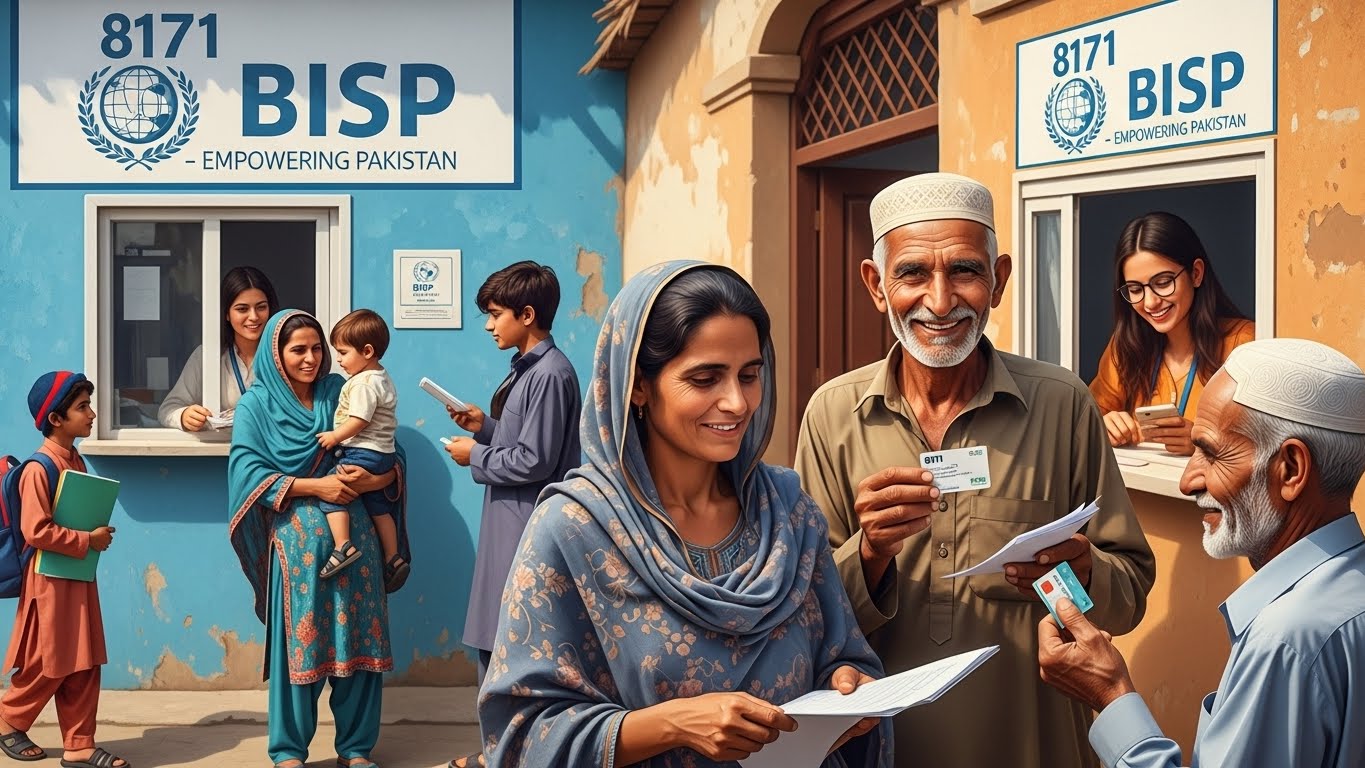
In recent years, Pakistan has witnessed a transformative approach to poverty alleviation through the 8171 Benazir Income Support Program (BISP). Designed to provide financial assistance and empower the nation’s most vulnerable populations, the 8171 BISP initiative represents a significant shift in social welfare strategies.
By leveraging technology and robust data analysis, this program not only addresses immediate financial needs but also fosters long-term economic stability among beneficiaries. As the country grapples with widespread poverty, the impact of the 8171 BISP extends beyond mere financial aid, paving the way for greater social equality and empowerment.
This article delves into the critical features of the program, its successes and challenges, and the profound effects it has on the lives of millions of Pakistanis.
The Benazir Income Support Program (BISP)has been making waves since its inception in 2008, aiming to cushion the financial blow for Pakistan’s underprivileged. Named after the late Benazir Bhutto, this program was designed to tackle poverty head-on, with an ambitious goal of lifting marginalized families from their hardship.
Over the years, it has evolved, adapting to the nation’s rapidly changing socio-economic landscape, and in 2021, it took a revolutionary turn with the introduction of the 8171 service to streamline support and expand its reach.
Objectives and Goals
At its core, the 8171 BISP initiative aims to provide a safety net for the most vulnerable segments of society through consistent financial support. The objectives are as straightforward as they are crucial: reduce poverty, promote economic stability, and enhance the living standards of beneficiaries.
The overarching goal? To create a self-sustaining society where everyone can have a fighting chance at a better life, all while ensuring that no one gets left behind in the race for progress.
Key Features of the 8171 BISP Program
Financial Assistance Models
The 8171 BISP has introduced a buffet of financial assistance models that cater to diverse needs. From direct cash transfers to support for education and healthcare, these models are designed to empower families rather than just put a Band-Aid on their problems.
The program’s cash grants provide a lifeline, supporting basic necessities like food and shelter while encouraging investments in education and small businesses to foster long-term growth.
Eligibility Criteria
Now, before you think it’s a free-for-all, let’s talk about the eligibility criteria. To qualify for the 8171 BISP support, applicants generally need to demonstrate financial hardship and belong to a low-income household.
The assessment involves a thorough review of personal and household income, ensuring that assistance indeed reaches those who need it most. After all, we want the right people to benefit from this well-deserved helping hand!
Application Process
Applying for the 8171 BISP assistance is like ordering your favorite pizza—easy and straightforward! Interested individuals can apply through SMS by sending their CNIC number to 8171, which triggers an eligibility check.
Those who qualify for assistance will receive a notification, and the whole process is designed to be user-friendly, so even your technologically challenged uncle can handle it without breaking a sweat.
Left Aligned Logo and Form
How 8171 BISP Empowers Pakistan’s Poor
Impact on Poverty Alleviation in Pakistan
Statistical Analysis of Poverty Reduction
You know what they say—numbers don’t lie! According to recent statistics, the 8171 BISP initiative has contributed to a noticeable decline in poverty levels in Pakistan, lifting millions of families above the poverty line.
Data indicates a marked reduction in food insecurity and improved access to education and healthcare services among beneficiaries. This isn’t just a drop in the ocean; it’s a tidal wave of change, reshaping lives and communities across the nation.
Economic Empowerment of Beneficiaries
The ripple effect of the 8171 BISP program goes beyond mere financial support. Beneficiaries are leveraging their grants to invest in education, start small businesses, and improve their overall quality of life.
With newfound economic empowerment, many have moved from survival mode to thriving, showcasing that when you put the power back in people’s hands, amazing things can happen. It’s like giving a fish a fishing rod instead of just handing over the fish—talk about sustainable changes!
Success Stories: Individuals Benefiting from the Program
Case Studies of Beneficiaries
Meet Zahra, a single mother of three who turned her life around thanks to the 8171 BISP. With her cash grants, she started a small home-based bakery that has blossomed into a local favorite—her cakes are now the stuff of legends! Zahra’s story is just one of many, proving that with a little support, determination can lead to remarkable transformations.
Community Transformation Stories
It’s not just individuals who are feeling the love; whole communities are experiencing a renaissance thanks to the 8171 BISP. Neighborhoods that once struggled with poverty are now bustling hubs of activity where families invest in education, health, and even local enterprises.
Community centers have sprouted, and empowered citizens are working together to tackle challenges collectively, creating a brighter future for everyone. With every success, the program plants the seeds for a more prosperous Pakistan!
Challenges and Criticisms of 8171 BISP
Implementation Hurdles
Even the best-laid plans can stumble, and when it comes to the 8171 BISP, there’s no shortage of hiccups. Implementation hurdles, such as bureaucratic red tape and outdated infrastructure, can slow down the program’s roll-out.
With some areas lacking reliable internet access, efforts to enroll beneficiaries can face delays, making the program feel more like a game of hide and seek than a streamlined service. Ensuring that everyone benefits equally requires creativity and flexibility from the authorities—two things that don’t always go hand in hand with government programs.
Public Perception and Trust Issues
When it comes to trust, the 8171 BISP has its work cut out for it. The program can often be perceived with skepticism—think of it as the new kid on the block trying to fit in. Many citizens are uncertain about whether the program will deliver on its promises.
Misinformation and past experiences with ineffective schemes fuel this skepticism. Building trust is crucial; effective communication and success stories can go a long way to change public perception, but it seems like it’s going to require more than just a few social media posts and viral hashtags.
The Role of Technology in Empowering Beneficiaries
Digital Platforms and Accessibility
In this digital age, if you’re not leveraging technology, you’re basically living in the stone age—no offense to our caveman ancestors. The 8171 BISP has hopped on the digital bandwagon, utilizing mobile apps and online portals to make the application process smoother than a well-oiled machine.
This tech-savvy approach not only makes it easier for beneficiaries to access their funds but also helps create a transparent system. However, it’s important to remember that while technology can empower many, it can also leave others in the dark—especially those without reliable internet access.
Innovative Solutions for Monitoring and Evaluation
Keeping tabs on a program as vast as the BISP is no easy feat. Enter technology: the superhero of monitoring and evaluation! By utilizing data analytics and real-time reporting, the program can better assess its effectiveness and make adjustments as needed.
Think of it like a fitness tracker for poverty reduction—tracking progress, identifying problem areas, and helping policymakers make informed decisions. But let’s just hope the technology doesn’t go “RoboCop” on us, right?
Future Prospects for BISP and Poverty Reduction
Potential Policy Reforms
The road ahead for 8171 BISP is paved with potential policy reforms that could turbocharge its effectiveness. By addressing issues like targeting accuracy, beneficiary inclusion, and fund allocation, the program can become a beacon of hope in poverty alleviation.
Strategic partnerships with NGOs and local organizations can also help refine policies to better reflect community needs. If policymakers are willing to roll up their sleeves and get to work, we could be looking at real change on the horizon.
Expansion Plans and Sustainability
For BISP to make a lasting impact, sustainability is key—because nobody wants a fleeting moment of success. Plans for expansion, including reaching underserved areas and diversifying support initiatives, signal a commitment to long-term poverty reduction.
Think of it as building a solid foundation for an ever-growing empire. By investing in education, vocational training, and job creation, the program can ensure that beneficiaries are not just surviving but thriving—because we all want to go from “just getting by” to “living our best lives.”
Conclusion: The Significance of 8171 BISP in Economic Development
Long-term Implications for Poverty Management
The impact of the 8171 BISP on economic development is significant—like, “we should probably get this guy a medal” significant. By providing targeted financial assistance, it can help lift families out of poverty and support their journey toward financial independence.
If leveraged properly, the program’s success could set a precedent for other nations aiming to tackle poverty head-on. Who knew tackling poverty could be the new trend?
Call to Action for Stakeholders
For the 8171 BISP to fulfill its potential, it needs the support of all stakeholders. This isn’t a one-person show; collaboration between government bodies, civil society, and private sectors can create a powerful force for change.
So, grab your capes, stakeholders, and let’s unite to ensure the success of this initiative. After all, when we work together toward the common goal of poverty reduction, everybody wins—and is there anything better than a win-win situation?In conclusion, the 8171 BISP has emerged as a vital tool in the fight against poverty in Pakistan, offering not only financial support but also a pathway to empowerment for countless individuals and families.
While challenges remain, the program’s successes highlight the importance of continued investment in social welfare initiatives. As Pakistan moves forward, the lessons learned from the 8171 BISP can inform future strategies aimed at fostering economic growth and improving the quality of life for all citizens. By prioritizing the needs of the most vulnerable, Pakistan can build a more equitable and prosperous future.
Frequently Asked Questions (FAQ)
What is the 8171 BISP and how does it work?
The 8171 BISP is a government initiative in Pakistan aimed at providing financial assistance to low-income families. It operates through a digital platform that allows eligible individuals to apply for support, ensuring a streamlined process for assistance distribution.
Who is eligible to apply for the 8171 BISP?
Eligibility for the 8171 BISP typically includes low-income households, women-headed families, and individuals facing economic hardships. Specific criteria can vary, and applicants are often required to provide documentation to support their claims.
What are the benefits provided by the 8171 BISP?
The primary benefit of the 8171 BISP is direct financial assistance to eligible families, which can help cover essential needs such as food, healthcare, and education. Additionally, the program aims to empower beneficiaries through skills development and access to resources.
How does technology enhance the implementation of the 8171 BISP?
Technology plays a crucial role in the 8171 BISP by facilitating online applications, tracking beneficiary data, and monitoring the disbursement of funds. This digital approach not only increases efficiency but also enhances transparency and accountability in the program.
By 8171Portal
This website, 8171portalnews.com, is an independent online platform created for informational Knowledge and educational purposes only. It is not an official govt website and is not affiliated with, endorsed by, or connected to any govt department or program. All content provided here is intended to guide and assist users with general information. While we strive to ensure accuracy, we do not guarantee that the information on this site is always up to date or free from errors. For official and verified details, please visit the official government website or contact the relevant govt authorities directly.